Author
Vin Lim
Founder, Astralab
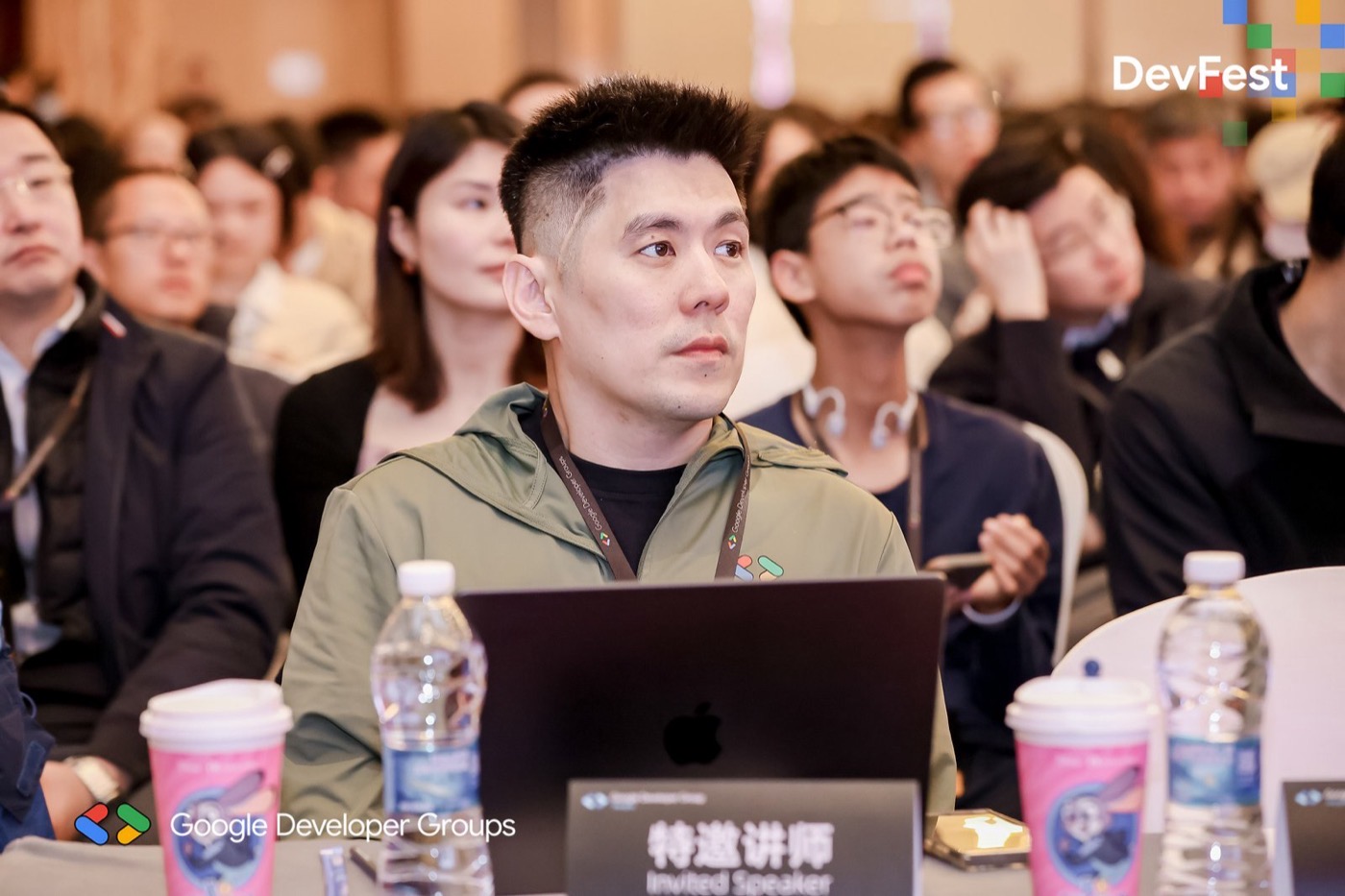
Vin Lim is the founder of Astralab and Arteesan and co-founder of StaffOS, with over a decade of software engineering experience. A Google Developer Expert, he has partnered with Google for over ten years to advocate web technology, speaking at conferences across the Asia-Pacific, running community workshops, and mentoring founders. Much of his work is on AI agents and the orchestration that keeps them reliable, built on the open web standards he helps shape.
Writing
2026
-
Auto Browser on WebVoyager-mini: 82.8% at 2.6 cents a task.DeepSeek V4.1 Flash passed 77 of 93 graded tasks on a 105-task WebVoyager subset for $2.75 in model calls. Claude Sonnet 5.5 scored within noise of that on the same agent, at 33 times the cost.Auto Browser
-
Should a different model review the code your agent wrote?The research does not show a second vendor catches more than a fresh session of the same model. It shows the two find different bugs. Over thirty days, Codex raised 763 findings on 278 pull requests written with Claude Code, and on first assessment the author model accepted 682 of the 731 it assessed (93%).
-
Auto Browser 1.5: WebMCP page tools now follow your permission settings.What is in v1.5: WebMCP page tools go through the same permission check as a click, their results are marked as text from the website, and on Chrome with native WebMCP the agent works through the DevTools protocol.Auto Browser
-
Security engineering for AI agent connectors: nine failure classesHow StaffOS secures the external tools its AI agents call: nine failure classes, including SSRF, URL templates and secret scope, and the control for each.StaffOS
-
Agent harness engineering: improving AI without fine-tuningHow StaffOS engineers context, tools and execution controls with the model weights fixed, backed by public research benchmarks, synthetic test cases and reproducible charts.StaffOS
-
Why coding agents build the same website, and what a design skill changedSame model, same three website tasks, with and without a design workflow. The skill passed 24 of 27 checks against 10, but 12 of those checks test its own paperwork. On what the user receives it scored 15 of 15 against 9 of 15.
-
Why every agentic payments number you have seen is measuring something elseNo one has measured the agentic payments market. The filters that separate real payments from machine noise delete agent behaviour by design.
-
Do LLM-Built Product Graphs Improve Ecommerce Search?Catalog text alone connected 90.04% of annotation-cold products and raised candidate recall, but simple RRF fusion lowered top-ranking quality.
-
Multi-tab orchestration, and the loop relocation that had to happen first.What shipped in v1.4: an agent that opens, groups and switches between tabs inside its own Chrome tab group, a ReAct loop moved out of the page into the service worker to make that possible, and a write-ahead journal that proves a resumed turn never repeats a dispatched action.Auto Browser
-
How to tell if a browser agent is any good. A field guide.A vendor-neutral way to judge any browser agent: why the public benchmark is not enough, five lenses that predict real-world reliability, and ten probes you can run on any agent in an afternoon.Auto Browser
-
An AI agent is not a prompt: what production takesWe build AI agents for a living, including Auto Browser. The architecture that separates an agent that demos from one that holds up: the loop, the decision channel, cost, isolation, and safety, with the numbers.
-
What it takes to build Sharia-compliant digital assetsNotes from a Kuala Lumpur roundtable on the future of Shari'a-compliant digital assets, from the team that architected Arteesan, a blockchain-backed art platform exploring tokenisation.
-
The perception rewrite, and the eval that finally tells us if we're heading the right way.What shipped in v1.1: iframe-aware perception, a four-provider abstraction with a behavioural contract test, an action-reliability bundle worth 14 points of accuracy and 54% less latency on the internal eval, and the harness that proves it.Auto Browser
-
The four phases shipped. Here's what actually landed.A follow-up to the audit: what shipped, where review caught us out, and why Phase 4 looks nothing like the version first described.Auto Browser
-
We compared Auto Browser to the best browser agents of 2026. Here's what we're shipping.A five-lens audit of Auto Browser against Surfer 2, Skyvern 2.0, Alumnium and Manus, plus the four architectural upgrades that followed.Auto Browser
-
What actually makes a prompt work in productionMost prompt advice is decoration. The patterns that actually change a model's behaviour are concrete: thresholds over adjectives, worked examples good and bad, named failure modes, enforced output formats, and where each instruction sits.
2025
-
Can you still teach yourself software engineering?AI has made the first working version of anything cheap to produce. Everything after that first version is still engineering, and that part has not moved.
-
Arteesan is the official digital partner of CIMB Artober 2025Arteesan, the platform our team architected, was the official digital partner of Malaysia's largest art exhibition: more than 30 galleries and over 100 artists, with AR experiences on the floor and a blockchain-backed provenance layer underneath.
-
Why the cheapest time to fix a wrong data model is right before launchA rename or schema fix feels risky, but the risk comes from only two forces: live traffic and existing data. Before launch you have neither, so the fix is one migration and a refactor, and the window is about to close.
-
Aptos Xponential, NYC Edition 2025: a week in the Builder HouseThe Aptos Foundation invited our founder to its Xponential builder program in New York. He spent it in the Builder House, working on Arteesan, the blockchain-backed art platform our team built, alongside founders from across the ecosystem.